


Why Does My Dog Ignore Me Outside but Listen Perfectly at Home?
- Carla Ladd
- Mar 17
- 3 min read

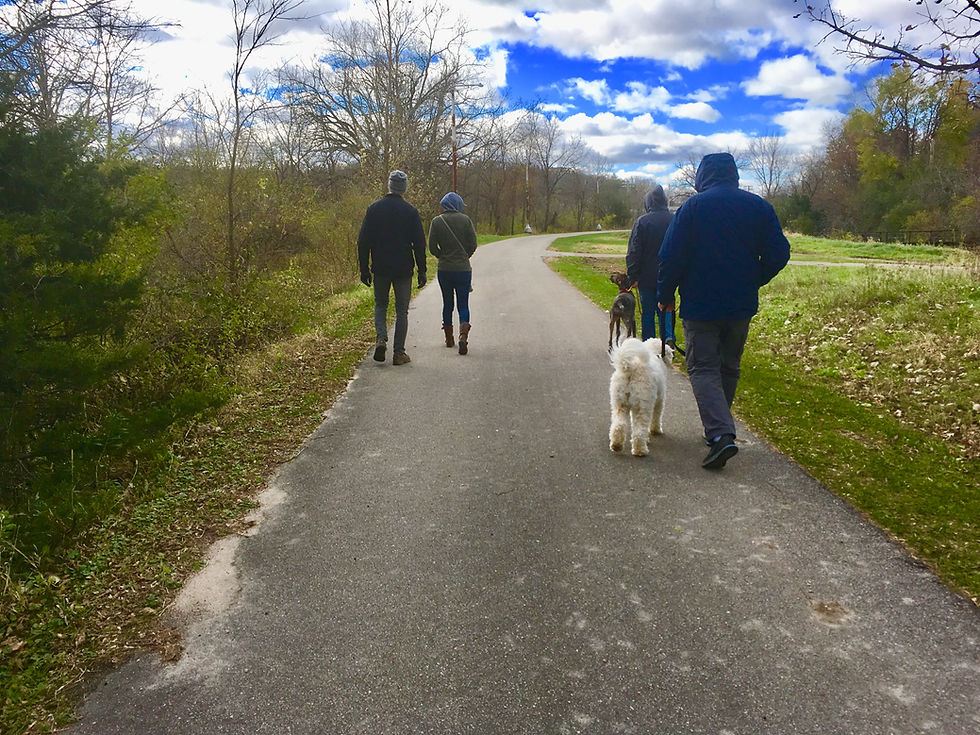
Learning to generalize commands helps your dog's ability to follow commands in new places.
This is one of the most common (and frustrating) things dog owners experience. Your dog responds beautifully in the living room—but the moment you step outside, it’s like you don’t exist. The good news? This isn’t defiance, stubbornness, or your dog “choosing” to misbehave. It’s a training gap, and it’s completely fixable.
The Environment Changes Everything
Inside your home, your dog is set up for success. It’s a familiar, low-distraction environment where they feel comfortable and know what to expect. There are fewer competing stimuli, so it’s easy for them to focus on you.
Step outside, and your dog enters a completely different world. New smells, sounds, people, dogs, and movement all compete for their attention. From your dog’s perspective, the environment is far more exciting and engaging than anything you’re asking them to do.
Training Doesn’t Automatically Transfer
One of the biggest misconceptions in dog training is that once a dog “knows” a command, they know it everywhere. In reality, dogs are very contextual learners. Just because your dog understands “sit” in the kitchen doesn’t mean they understand it on a busy sidewalk.
This is called generalization—and it has to be taught.
If your dog ignores you outside, it usually means they haven’t fully learned that your cues apply in different environments. It’s not a lack of intelligence or respect; it’s a lack of clarity and practice in those settings.
Distraction Level Matters
Think of distractions like volume levels. Inside your home, the volume is low. Outside, it can go from moderate to overwhelming very quickly. If you jump straight from your living room to a high-distraction park, you’re essentially asking your dog to perform in a situation they’re not prepared for.
That’s where many people get stuck—they expect the same level of obedience without building up to it.
How to Fix It
Start by meeting your dog where they are, not where you want them to be.
Begin practicing in low-distraction outdoor areas, like your backyard or a quiet street. Once your dog can focus and respond reliably there, gradually increase the difficulty. Add mild distractions, then more stimulating environments over time.
Keep your expectations realistic. If your dog is struggling, the environment is likely too challenging—take a step back and simplify.
Consistency is key. Follow through on your cues, communicate clearly, and make sure your dog understands that listening isn’t optional depending on location. At the same time, build value in yourself by being engaging, fair, and predictable.
Focus on Relationship and Leadership
At the end of the day, your dog choosing to listen outside comes down to relevance. In a world full of distractions, you need to matter.
This doesn’t mean being louder or more forceful—it means being consistent, clear, and worth paying attention to. When your dog trusts your guidance and understands expectations, their ability to focus improves dramatically.
The Bottom Line
If your dog listens at home but not outside, you’re not failing—and neither are they. You simply need to bridge the gap between environments through structured, progressive training.
With the right approach, you can teach your dog that commands don’t just apply in the house—they apply everywhere. And when that clicks, everything gets easier.
We can help you create a training plan tailored to your dog and your specific situation, as well as providing lifetime access to group Polishing Classes to keep your dog's listening skills sharp around distractions.


Comments